Tuesday, March 4, 2014

Trench Warfare


Trench warfare, a type of land warfare, occurs when two opposing armies are in battle and are forced to make trenches (or ditches) and fight from these positions. When trench warfare is necessary, it is because both armies are facing a stalemate. A stalemate is defined as, "a position counting as a draw, in which a player is not in check but cannot move except into check" and is basically when neither army could move up or down the battlefield. Despite the fact that trench warfare had been used in past battles, it was revolutionary when introduced and used on the Western Front in World War I. Being a soldier during this time was significantly difficult due to the fact that they had to endure with diseases, night patrols, raids, gas attacks, "shell shocks, etc. 


Trench warfare was first introduced in World War I in September of 1914 during the First Battle of the Marne, also recognized as the Miracle of the Marne. This battle was fought between September 5th and September 12th in Paris and resulted in an Allied victory. Modern weaponry hindered the armies from using head-on attacks and they were consequently forced to adapt to tench warfare. At first, this tactic was though to be temporary; however, due to its success, it became a crucial feature to World War I. The First elaborate trench line was 475 miles long. It was complete by November of 1914, with a starting point at the North Sea and ending point at the Swiss frontiet. This trench line ran through Belgium and France.


Despite the fact that trench warfare was a revolutionary tactic during WWI, it also introduced, not so new yet crucial issues. Before trenches were fully developed they were also used for protection; however, death was coming their way from other directions including: rat infestation, frog and rat diseases, etc.  Rats, both black and brown, infested the trenches during this time. They would eat the remains  of dead soldiers and often grew to be the size of cats. Rats were greatly feared considering the fact that they not only spread infections but ultimately contaminated food. Rats were capable of producing 900 offspring yearly, making this issue even more severe. Trench Fever and Trench Foot were two feared diseases. Trench Fever was detected by mild pain and fevers, the victims of this disease did not recover until having been at least twelve weeks away from the trenches. Trench Foot, on the other hand, was a fungal infection ultimately caused by unsanitary conditions in the trenches. 


Monday, February 24, 2014

Progressive Characters

Progressive Characters 

Theodore Roosevelt


    A. Explain the biographical ideas behind the character 
Theodore Roosevelt was born and raised in New York City. As a child he was sick very often; consequently, forcing him to spend much of him time at home. During this time he fell in love with reading. Since Roosevelt wasn't brawn or had much fun as a child, as an adult he lived a life full of risks.

    B. Explain the major legislation related to this character

The Major legislation(s) related to Theodore Roosevelt include: the Big Stick Policy, Monroe Doctrine, and the Bull Moose Movement. The Big Stick Policy read, "A man should walk softly and carry a big stick". This basically meant that if a country needed to be controlled, the United States should control it (since it carries the 'big stick'). The Monroe Doctrine was by President James Monroe which prohibited European countries from taking over South and Central America, Roosevelt basically edited it by adding the Roosevelt Corollary.

    C. Describe how this character attempted to progress the nation.

Theodore Roosevelt is delineated as a man who was willing to help the United States progress through out his whole life. For instance, he was a believer in Manifest destiny who additionally claimed that it was the United States' duty to help others seeking or lacking aid. When the Anthracite coal miners launched a nation wide strike Roosevelt stood for what he believed in and fought alongside the workers (figuratively). 

Woodrow Wilson


    A. Explain the biographical ideas behind the character
Today, Woodrow Wilson is not only commemorated for have been the twenty-eighth president of the United States but is also remembered for having lead the country into World War I. Wilson strongly believed and advocated the idea that the United States had the power and responsibility to help the rest of the world be free and democratic. Many did not agree with Woodrow's argument; however, that did not impede him from intending to help America progress. 
  
    B. Explain the major legislations related to this character
The major legislations for which Woodrow Wilson is remembered include: the theory of Moral Internationalism, the Treaty if Versailles and his 14 Points. Wilson's theory advocated that America was a strong and prosperous country, and had to therefore be involved. The Treaty of Versailles ended the World War I for which Wilson contributed his 14 Points. The 14 Points included ideas such as: Peace without victory, freedom of the seas, and the league of the nations. Unfortunately, despite Wilson's great effort, the treaty was never accepted by the United States. 

    C. Describe how this character attempted to progress the nation.
Wilson is characterized as a determined and relentless man willing to give up his own life, just to help thee United States progress. He fought for the Treaty of Paris to be accepted and ratified in America, without any success. The most controversial part was the League of the Nations from his 14 Points. The league of Nations was the idea that if all countries joined each other they'd be successful in overcoming obstacles including: hunger, poverty, and war. 

Ida Tarbel


    A. Explain the biographical ideas behind the character
Ida Tarbel was born and raised in Pennsylvania, she  is characterized as a relentless, risk taking and successful individual coming from a determined and hard-working family. She was the first woman to attend and graduate from Allegheny College, she taught herself French, became a prominent writer in Paris, and even the author of a best-selling book. She was the first of the muckrakers, and a very distinguished one at that. 


    B. Explain the major legislations related to this character
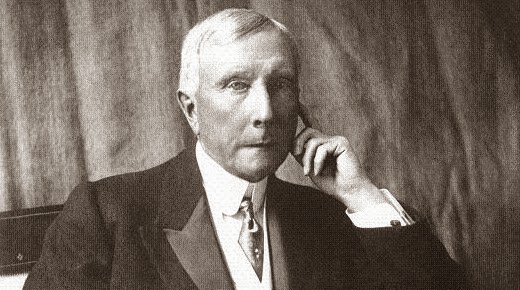
Tarbel's family. wildcatters, owned oil wells. John D. Rockefeller owner of the Standard Oil Company stole the oil fields from the owners of the oil fields, including Tarbel's family. As Tarbel became a well-known writer she became interested in exposing the Standard Oil Company and it's real intentions. She was also distinguished from most muckrakers considered that she was respectful despite the fact that she felt anger toward Rockefeller and his company.

    C. Describe how this character attempted to progress the nation.
Due to Ida Tarbel's personal life and experience she became a well-known journalist, a muckraker. She was willing to risk her life and reputation in order to expose the "bad aspects" of the United States including the Standard Oil Company. Her work in writing ultimately lead to the investigation on the Standard Oil Company. The company was consequently considered a monopoly and broken up into six independent companies. 

Robert La Follette


    A. Explain the biographical ideas behind the character
Robert La Follette also known as "Fighting Bob" was born into an average American family in Wisconsin. He is characterized as having been a hard-working, just and moral man. He always remembered to speak out in favor of those in need, the less fortunate. He joined the District Attorney's office in Madison and soon came to the realization of how corrupt it actually was. Being a just and moral man, La Follette decided to speak out against it's corruption and ultimately became known as a trustworthy man. 


    B. Explain the major legislations related to this character
While he was involved with the House of Representatives, La Follette was involved in two significant legislations that granted people REAL power. Initiative and Referendum. Initiative was the idea that allowed citizens to propose laws without help from the legislature. Referendum however, was the idea that allowed the people to end an elected official's time of office earlier than expected. He was also the person who engendered the Wisconsin idea. 

    C. Describe how this character attempted to progress the nation.


Robert La Follette ran and was elected for the United States' House of Representative. Here he was best known as a just and equal "straight-talker" willing to expose corrupt Democrats and Republicans (even though HE was a Republican). He was a man willing to propose new ideas including: the Wisconsin idea, initiative and referendum, all three with one sole purpose: return the power of the people to the people. 


   A. Explain the biographical ideas behind the character
John D. Rockefeller was born in New York into a less fortunate family. Rockefeller is characterized for having been risk-taking and dedicated person when he was still only a inexperienced bookkeeper. However, as he worked his way up the social ladder he became a corrupt, ambitious and vicious business man ultimately becoming the owner of the Standard Oil company (a monopoly).                     

    B. Explain the major legislations related to this character
During the time in which oil was discovered, it instantly became a high demand. Rockefeller and friends joined to create their own oil company, the Standard Oil company. Their company soon became a monopoly of the oil refineries (1872). Predatory pricing assured Rockefeller's company that no one would try to compete against it, and if anyone did, they would fail. 

    C. Describe how this character attempted to progress the nation.John D. Rockefeller is not really characterized as an individual willing to help the United States progress. Instead, he is a person perceived as selfish and ambitious. Rockefeller opposed unions and did not allow them in the Standard Oil Trust. Even though he may have been mostly interested in his and his companies' well-being, he did help universities, African American Colleges and research institutes economically. 
Eugene V. Debs 


    A. Explain the biographical ideas behind the character
Eugene V. Debs was born in Indiana, into a low-income, yet surprisingly positive and happy German family. Debs is characterized for having been generous and kind, yet ferocious. Unfortunately, he was often perceived as an intellectual. When he realized that college was not an option he became a firefighter. At this time he realized that unnecessary and preventable accidents were taking place: it was the industry's fault. 

    B. Explain the major legislations related to this character
Since the day that a man seeking Debs' help asked him for aid, Debs became a Union activist. The man wanted to engender a union for railway workers and he knew Debs would be of great help. Debs ultimately created the American Railway Union or ARU. Unfortunately, the ARU was destroyed and Debs was arrested after the Great Railway Strike. The Railway Strike was a very important strike fighting for the Pullman workers' rights.

    C. Describe how this character attempted to progress the nation.
Eugene V. Debs was a hard-working man willing to do anything in order to help those in need. He was a just and equal man who fought for the workers' rights his whole life. He believed in socialism and advocated for change in the United States. 

What was life like in the South for African Americans after Reconstruction ended in 1877?

What was life like in the South for African Americans after Reconstruction ended in 1877?

Even after the Reconstruction period ended in 1877 and life was slightly better for African Americans, they were still victims of discrimination, segregation and intimidation. In 1865, after the Civil War ended, the first Ku Klux Klan was established by a majority of white members. The KKK was a social club for confederate soldiers willing to practice and advocate white supremacy. Despite the fact that 13th amendment abolished slavery, the 14th amendment gave citizenship and the 15th amendment granted suffrage to all men African Americans were still ostracized. The African American population was only "free" on paper. When the KKK Act was passed in 1971, the United States government was allowed to act against terrorist organizations, resulting in the end of the first KKK. However, their would be a second and third KKK.

"Birth of a Nation", one of the black and white, silent first films, was introduced in 1915. The film was originally called "The Clansmen" and was by D.W Griffith. Today the film is commemorated for having been a great masterpiece despite its controversial criticism. The Jim Crow Laws, were racial segregation laws enacted between 1876 and 1965. The Jim Crow laws established segregation in public schools, the military, transportation, even restrooms and any public places. The Plessy v. Ferguson Supreme Court case of 1896 was in regard to the Jim Crow Laws. The ruling of this case was to legally establish segregation in the United States. This was when the idea "separate but equal" was introduced.

Saturday, February 22, 2014

Native Americans - Immigration Project

Native Americans

with Edgar Hernandez

How were the Native Americans affected by the immigration of European settlers? 

Christopher Columbus
James Monroe
During the late fifteenth century European settlers arrived in North America. Christopher Columbus went on a voyage sponsored by the king and queen of Spain. He was in search of a western route leading to Asia. Instead, he set foot in North America in October of 1492. In this new continent they encountered a population of people whom they called the "Indians". They had actually come across Native Americans, whose population was approximately 900,000 at the time. There were also approximately 300 different languages shared by the Natives. Unfortunately, the immigration of the Europeans into their home would soon prove to be willing to destroy them. Not only were the Natives forced to share THEIR home with European settlers, but the settlers thought it was right to restrict them to certain land. The first Native American reservation in the United States was created in 1786. Reservations were around for over a century but in 1821, James Monroe criticized them stating that this type of treatment, "flattered their pride, retarded their improvement, and in many instances paved the way to their destruction". Monroe was later successful in his attempt to remove the Native Americans from all states north of the Ohio River. It is quite evident that during the first three-hundred fifty years after the Europeans set foot in America, they had already started destroying the Native customs, culture, and lives. They were being directly affected by being forced into constricted areas, of their own home! 


Link to James Monroes' Second Inaugural Address
http://www.bartleby.com/124/pres21.html 


How did United States government policies and programs affect the Native Americans directly? 

Andrew Jackson
In 1830 the Indian Removal Act became a law in the United States. The law was signed by president Andrew Jackson, which had fourteen months earlier emphasized, "to observe toward the Indian tribe within our limits a just and liberal policy, and to give that human and considerate attention to their rights and their wants whish is consisten with the haabits of out Government and the feelings of our people", during his inaugural address of inaugural address of 1829. Not only did Jackson sign the bill, but he asked Congress to allow this specific act to be passed. This law forced the Natives to leave their homes and travel to the Indian territory west of the Mississippi River. After the Lousisiana Purchase, the United States had an abundant amount of land west of the Mississippi River, land that was not necessarily desired due to its simplicity. Initially, the law granted the native tribes the option to choose whther they wanted to move or not. The deadline that the Natives had to actually move was in 1838. When time approached, soldiers and volunteers from Georgia decided to move the Indians, forcibly. This forced removal is known as the Trail of Tears. Natives were forced to walk ONE THOUSAND miles to their destination. Not only was the journey extremely long, but painful. Natives were killed, raped, and even hunted during this time resulting in approximately four thousand Native deaths.


Link to audio recording of Native American song commemorating the Trail of Tears:


http://memory.loc.gov/cgi-bin/query/h?ammem/flwpabib:@field(NUMBER+@band(afcflwpa+3894b1))


Link to Andrew Jackson's Inaugural Speech of 1829:


http://www.bartleby.com/124/pres23.html


How did war and war-like conditions impact the Native Americans' experience? 

James Blunt
James Blunt's letter
December 2, 1862
The American civil war was the bloodiest war in American history with the greatest deaths yet recorded, it began on April 12, 1861 and finally concluded on May 10, 1865. Growing issues between the Northern and Southern states involving tariffs, railroad taxes, and especially slavery were what caused this war. The Southern states felt that as an independent nation they would succeed and decided to secede, they were known as the Confederate states and had Robert E. Lee as their military general. The northern states however, were known as the Union and had Ulysses S. Grant. During this time the Union needed as much support as they could possibly have which is why they invited and even encourage Native Americans to voluntarily fight alongside them. On December 2, 1862 James Blunt, a physician, abolitionist and Union general, wrote a letter intended for the Natives inviting them to the war. Despite the fact that the Natives fought for the Union, they were still denied citizenship in the United States. 

Link to James Blunt's letter to the Native Americans:

How were the Native Americans' betrayed, used and affected by the whites?

Christopher Houston Carson, also known as "Kit" Carson, was a well-known Indian fighter and significant trapper. In 1862, the Native Americans were invited to fight alongside the Union army in the Civil War. Not only were the Natives still denied Citizenship at this point but on July 7th of 1863, Kit Carson and his troops were determined to fight the Navajos, Indians of New Mexico and Arizona. What did these actions portray of the white men? Had they simply utilized the natives' aid? As a result of this battle against the Navajos, these natives were forcibly removed to southeastern New Mexico from the Four Corners area. In 1868 African American men were granted the right to vote in the United States. Unfortunately, Native Americans were specifically rejected suffrage in a clause of the fourteenth amendment. Even though the natives had been the group of people to have initially populated the Americas they were segregated, humiliated and destroyed. Copious battles were fought against them and various acts were established. The whites' ultimate goal was to destroy the Native Americans and ultimately gain power over their homes. 

Link go audio recording of an interview with an Oklahoma settler:
Delineates the violence between Whites and Native Americans.

Sunday, January 26, 2014

Samuel Hopkins Adams


Today, Samuel Hopkins Adams is commemorated for having been a successful American writer and an individual who publicly spoke out against health issues. He was born in Dunkirk, New York on January 26,1871. In 1887, at age sixteen, Samuel Hopkins Adams went to Hamilton College. He worked for the New York Sun, a politically conservative newspaper published between 1833 and 1950, for several years. He married his first wife, Elizabeth Ruffner Noyes in 1898, with whom he had two daughters. in the year 1900, Adams began to work with the McClure's Magazine. There he met Ray Stannard Baker, a journalist and muckraker. A muckraker is a "reform-minded journalists who wrote largely for popular magazines and continued a tradition of investigative journalism reporting”.


Samuel Hopkins Adams became a muckraker and began to speak out about public health issues in the United States. In 1905 Adams joined an American magazine founded by Peter Collier called Collier’s Weekly. During the span of time for which he was employed by this magazine, Adams published several articles focusing on the patent medicine market. Eleven articles to be exact. Patent medicine is defined as,compounds promoted and sold as medical cures that do not work as promoted”. Samuel Hopkins Adams is credited for having contributed to the introduction of the Pure Food and Drug Act of 1806 in the UNited States. This act required labels containing ingredients on food, and it prevented the making and selling of poisonous food, liquids, or drugs.  


Despite the fact that the Pure Food and Drug Act of 1806 had been established, in 1911, the Supreme Court ruled that label falsification was unacceptable only when it came to medication. This decision made it easy for useless products to be sold once again. Adams, was determined to bring out the truth and once again published various articles on false advertisement by various companies.


Monday, January 20, 2014

Battle of Little Bighorn - Alison's Textbook

Battle of Little Bighorn

The Battle of Little Bighorn, also known as "Custer's Last Stand" was fought on June 25th and 26th of 1876. near the Little Bighorn River; hence, its name. The battle was fought between three native tribes and the 7th Cavalry Regiment (the U.S. Army). The tribes consisted of the Cheyenne, Lakota, and the Arapaho. Today, various ideas have been developed about the battle according to the perspective. 

According to the Treaty of Laramie of 1868, the Black Hills were rightfully within the Sioux's reservations borders. However; when gold was discovered by the Americans near the border of the Sioux reservation (the Black Hills), tension grew between the Natives and Americans. 1874 was when the Black Hills Gold Rush officially began. According to Kate Bighead, a Cheyenne Indian, the American Army attacked the CHeyenne campsite near the Washita River. Not only did they destroy their food, belongings and shelter, but they also killed Chief Black Kettle. Driven by hatred and ambition, the Americans broke their peace treaty with the natives ultimately resulting in the natives conducting raids against the whites. 

After the American settlers and gold-miners first attack on the Cheyenne, they were forced to seek help from other tribes. The Sioux, led by Sitting Bull,  aided the Cheyenne and they camped together. As time passed, and danger approached, more natives came together. In 1876, six tribes camped near the Little Bighorn river when American were seen south of their camp. The Battle of Little Bighorn officially started and the natives won. Not only did the natives victoriously win; but the battle resulted in 268 deaths and 55 injuries for the Americans.


Wednesday, January 15, 2014

Chinese Immigration and Exclusion

Chinese Immigration and Exclusion

After the American Civil War (1861-1865) ended, immigrants from various nationalities came to the United States. From 1870-1880 most of the people migrating here came from Ireland, Germany and England. However, even prior to the Civil War, the California gold rush attracted copious immigrants, Chinese immigrants specifically. In 1848 gold was discovered at Sutter's Mill which was when the Chinese initially came to the United States. These Chinese immigrants came to the U.S. determined to work; unfortunately, they were eventually prohibited in 1882, when the Chinese Exclusion Act was enforced. Despite the hatred and racism they underwent, Chinese laborers worked as gold miners, railroad construction workers, industrial and agricultural workers, some were even able to develop their own small businesses such as laundries and restaurants.

According to Document A, an anti-Chinese play called "The Chinese Must Go" from 1879, the reason as to why the Chinese Exclusion Act of 1882 was enforced was that they wanted to take over jobs that were rightfully for Americans. However, the script also implied that the Chinese wanted to get rid of or even kill the Americans. maybe they thought that the Chinese yearned to take over America. "White man no work, no money, die - sabee?" According to Document B, a political cartoon by Thomas Nast for Harper's Weekly in 1871, the reason as to why the Chinese Exclusion Act of 1882 was enforced was because immigrants of other nationalities disliked the Chinese. The cartoon portrays several Irish and German "thugs" wanted to kill a man being protected by Columbia. In the background there is a noose hanging from a tree and there are various signs with explicit words expressing hatred toward the Chinese. "If our ballot will not top them from coming to our country, the bullet must."


According to Document C, a speech to the workingmen of San Francisco from August 1888, the reason as to why the Chinese Exclusion Act of 1882 was enforced was similar to that of Document A. Document C also implies that American citizens wish to banish the Chinese because they are taking their jobs. "This state of thing brings about a terrible competition between our own people, who must live as civilized Americans, and the Chinese..."According to Document D, an excerpt from Lee Chew's autobiography from 1903 called "The Biography of a Chinaman, the reason as to why the Chinese Exclusion Act of 1882 was enforced was similar to that of Document B: jealousy. Chinese labrers were known to be honest, sober, and even talented. Irishman, Germans, Englishman and Italians were not being hired simply because Chinese were a "better" option.